
A book by neuroscientist Irene Salter, PhD
Wanderlust Comes Home
How Travel Changes Your Brain
Why does vacation brain vanish by the first Tuesday back? And what would it take to make it stay?
“The book Irene Salter is writing is the book I’ve been waiting for.”

I went around the world looking for what was missing at home.
Travel had always been my way of escaping the exhaustion of my overachieving, perfectionist, workaholic tendencies. I’d go somewhere far away, and for one precious, time-stopping moment I’d hover, completely alive, before crashing back to Earth, back to home, and back to an all too familiar malaise.
Why? Why do I come alive when I travel yet feel flat, overwhelmed, and stuck in my everyday life? And how can I make my travel brain stick?
So I did what any PhD neuroscientist might do: I turned myself into the experiment.
I spent a year traveling the world with my family and researching wanderlust, hoping to understand what was wrong with me at home and what was right with me abroad. Along the way I had to confront a hard truth: studying travel wasn’t going to solve my problem, it was the problem. I had to live travel, not study it, to find aliveness.
It worked. Sort of.
Bringing travel brain home is much harder than it looks. To the brain, home is a hostile retrieval context: the same kitchen, the same school drop-off, and the same backyard smells all pull you back toward the person you were before you left. If you’ve ever watched a vacation glow fade within a week of unpacking, you know exactly what I mean.
Wanderlust Comes Home is the story of my year of travel, how travel changes the brain, and precisely how to make those changes last. I put on an EEG headband to rigorously study myself, and I sat down with scientists, futurists, and travel writers to make sense of what I found.
What finally kept travel alive at home were Brain Trips: research-backed practices that link the same-old cues of everyday life to new travel habits until they stick, even on an ordinary Tuesday. Every chapter ends with one, so you can bring that aliveness home to stay.
Every chapter is a place, and every place is a discovery.
Wanderlust Comes Home is a true story told by a neuroscientist, with practices you can use at home, for readers of Breath, The Comfort Crisis, and Enchantment who want to come alive again. It moves through a preparation and four expeditions, and every chapter closes with at least one Brain Trip.
Introduction
-
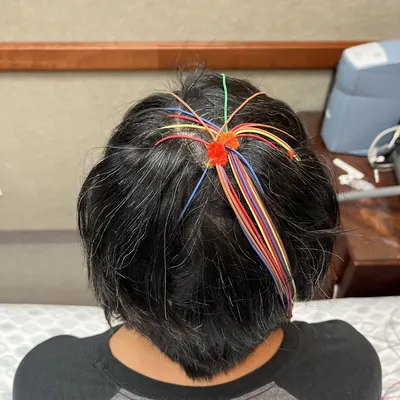
Chapter 0 Lab
This book is for those who love to travel and wonder why
Preparation
-
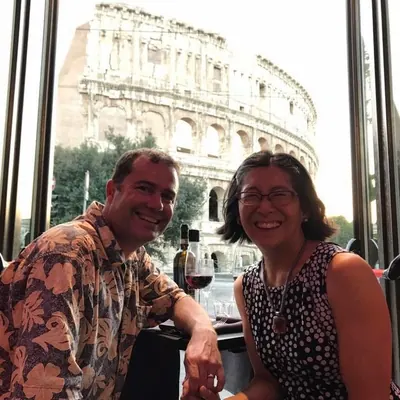
Chapter 1 Rome
Wanderlust is biological, not optional
-

Chapter 2 Airports
You can’t escape a stressed-out nervous system
Expedition One: Mind
-

Chapter 3 London
Pleasure does not lead to lasting happiness
-
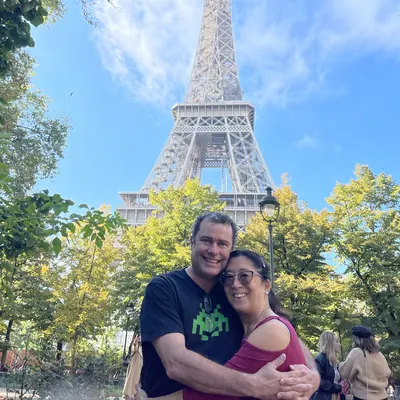
Chapter 4 Paris
Seeing beauty is not the same as being open to it
-
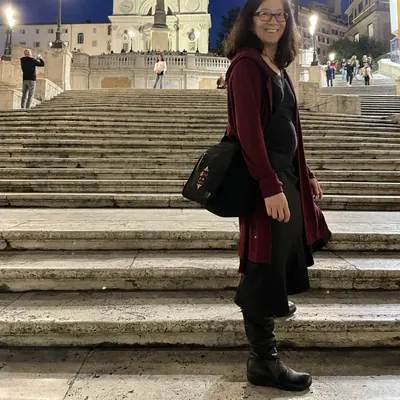
Chapter 5 Rome
Getting lost is the key to finding your place
Expedition Two: Heart
-
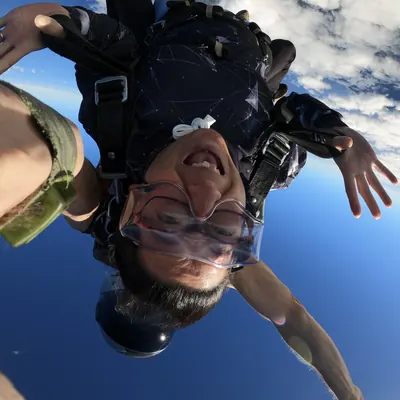
Chapter 6 California
You can’t think your way into emotions
-

Chapter 7 Volcano
Family vacations make you take a good long look in the mirror
-
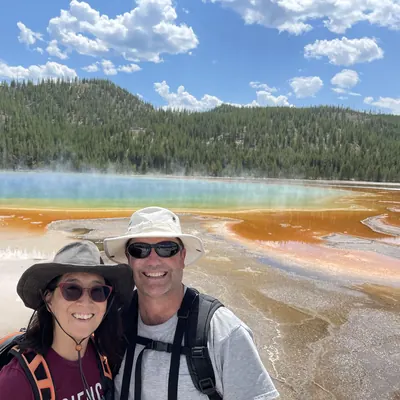
Chapter 8 National Parks
Even grownups need recess for play and fun
Expedition Three: Soul
-

Chapter 9 Istanbul
Presence is letting go of how things should be and accepting how things are
-

Chapter 10 Egypt
Awe connects you to something larger than yourself
-
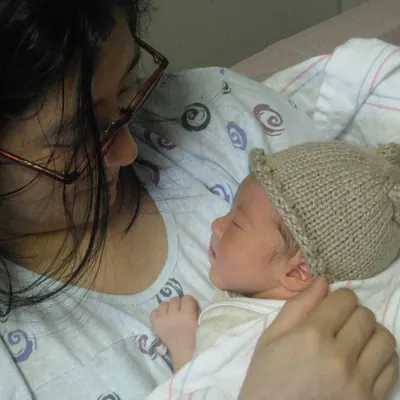
Chapter 11 Corfu
The cuddle hormone brings love, calm, and connection
Expedition Four: Homecoming
-
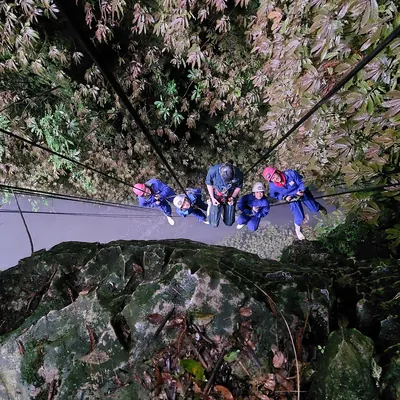
Chapter 12 New Zealand
Move beyond upper limits to flow with the world
-
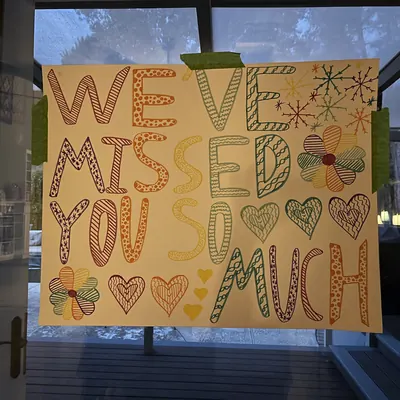
Chapter 13 Home
Pushing back against the pull of habit
Try a Brain Trip.
Every chapter ends with a Brain Trip, a practice that teaches your brain to find at home what it finds so easily on the road. Each one is grounded in research and has been field-tested with real people in live workshops. Here are four to start with, free.
-
Savor
Guided audio, 5:36
Five minutes to make an ordinary moment stay.
Transcript
Savoring. Why is it so rare for us to take the time to actually savor our food? We do it naturally when it’s an expensive glass of wine or a delicious dessert or an incredibly special meal experience. But day to day, every day, it’s very rare for us to do. So I’d like you to try what it’s like to savor a single bite in a way that really activates those hedonic hot spots in your brain. You’re going to need a single bite of food. It could be an almond, a blueberry, a cracker, a square of chocolate, a spoon that’s been dipped in yogurt.
Whatever it is, go ahead and pause this recording and go grab that single bite. All right, you got it? Great. You’re going to use each one of your five senses to truly savor this one bite of food. We’re going to go super, super slow. It’s the opposite of mindless eating, what we do when we’re at the movie theater and eating a whole thing of popcorn. This is mindful eating. It’s truly savoring this one bite as if it were the most priceless experience you could possibly imagine. So let’s begin by looking at your bite of food.
How does the light fall upon the surface? What do you notice about the different textures? How many colors can you name? Is the surface shiny, rough, or smooth? If you turn it over without spilling the yogurt, what do you notice on the other side? What’s the same? What’s different? Now add the sense of touch. Imagine that you are a toddler touching this food for the first time. I want you to feel the surface with your fingers. I want you to notice the temperature. Is it hot or cold? Squeeze it gently. Is it hard or soft?
Does it feel different if you rub it on the back of your hand versus the palm versus your fingertip? Now add smell. Close your eyes and take a big breath of the smell. Name every scent molecule you can. Sugar, curry, sweet, fruity. Pretend you’re a wine sommelier with all of the silly words they use to describe wine. Is it smoky? Now I want you to actually break it apart or cut it or pull it or smoosh it. Look at the insides. Is that inside any different than the outside? Does it add extra smells, extra feel, extra sight?
Is your mouth watering yet? You’re going to put it on your tongue, but don’t bite down yet. Roll the bite of food around so that it lingers luxuriously on all the different parts of your mouth. Right at the tip of your tongue, on the sides, on the back. Name each of the flavors you can detect. Sweet, salty, fatty, bitter, savory, umami. When you can’t stand it any longer, bite down slowly and deliberately. Chew slowly and longer than usual with your tongue, which has some of the greatest number of touch nerve endings in your body.
I want you to use your tongue to observe the changes in flavor and feel. Notice perhaps different smells that might be added as you chew. And finally, swallow. Try to pinpoint where it is in your body that you can no longer feel it on its way down to your stomach. That’s savoring.
-
RAIN
Guided audio, 16:55
Recognize, Allow, Inquire, Non-identify: a way through the emotion you’d rather not be having.
Transcript
Welcome. I’d love to treat you to one of my favorite mindfulness practices of all time. It’s called the RAIN Meditation. R-A-I-N. I’ll teach you what each of the different parts stands for in a moment, but the reason why this is so impactful for me is I was introduced to it when I was the principal at a science school and COVID had just hit. It was a time when things were at some of the most stressful that I’ve ever encountered in my life. I had to help this school, its teachers, its families navigate through a really stressful, scary, chaotic time.
Emotions were so high and the RAIN Meditation allows for us to work our way through our emotions so that we can have some self-compassion for ourselves as human beings that are messy and squishy and vulnerable and very irrational sometimes. My son is learning how to drive and he said to me in the car, “I am irrationally scared about driving,” and of course you’re irrationally scared because emotions are inherently irrational things. Yet we are human beings with these deep emotions and all of the literature suggests it’s so much better for us to find a way to move through our emotions and feel them all the way through rather than suppressing or compartmentalizing or ignoring the way that we feel.
And the RAIN Meditation allows us to try and do a little bit of that. In fact, people that do portions of the RAIN Meditation (and the first step of it is to recognize), if people simply stop and name the emotions they feel, they move through those emotions a lot more smoothly in life. So let’s try. To begin go ahead and get yourself into a really comfortable space. You can sit back, you can lean back, you can sit up tall and straight, you can lie down on your bed, whatever feels most healing and comfortable for you right now.
And in the spot just take a few breaths. Breathe in and breathe out. Breathe in and out. No need to change the way that you breathe. No need to force yourself to go slow or faster. Just breathe in and out. Now the RAIN Meditation is especially helpful when we have big emotions. So what’s the emotional state that you’re in right now? How are you feeling? The “R” in RAIN stands for recognize. Recognize what is happening inside in that heart space right now. What feelings do you feel and are most aware of? And try to name them.
Are you feeling sad? How big is that sadness? Is it a little bit weepy? Or is it distraught? Are you full of grief? Maybe it’s fear. What flavor of fear? Anxiety, worry, dread. If it’s joyful, see if you can name what kind of joy. Delight, pleasure, peace, love. Whatever emotion it is, give it a name. What is happening inside you right now? Recognize the emotion and give it a name. Whatever that feeling might be, I want to see if you can locate it in your body. Emotions come with physical sensations, tightness in the throat, a pit in the middle of your stomach, tension in your shoulders, tingling in your fingertips.
Whatever that might be, scan through your body and for the emotion that is most present for you right now, where do you feel it? Your toes, your knees, your sit bones, your stomach, your heart, your arms, your hands, throat, your head, your scalp. Where do you feel it the most? Is it buzzing, tingling, tightness, tension, hard lump? Go ahead and name it and feel it. This too is part of recognize. “R” stands for recognize. The “A” in RAIN stands for allow. Allow yourself to be human and to feel. So often we shove our emotions aside.
We say to ourselves we shouldn’t be feeling this way. I should be bigger than this. I should be stronger. I shouldn’t feel so deeply but in this moment I want to allow you to be completely human and to feel your emotion all the way through. Accept for right now what is. If it helps you can say yes I’m feeling anger or yes I’m feeling so sad. If your body throws up a big “No, I don’t want to be in this,” soften, breathe. In fact encourage yourself to feel as deeply as possible. As deeply as feels safe. Sometimes it helps if you feel a tightness in your throat or a lump in your stomach to really lean into that.
To allow yourself an opportunity to cry if you want to cry. To laugh out loud if you’re feeling joy. To clench your hands in anger and make a face and shout if you’re full of rage. In this moment allow yourself to feel. The research suggests that waves of emotion only last 90 seconds to no more than five minutes. The intense wave of emotion will course through you so quickly. Right now we’re gonna allow your body to feel.
Allow yourself not to judge, not to push away, not to try to control. Allow yourself to feel. The “A” stands for allow. The “I” in RAIN stands for inquire, inquiry. It’s the act of asking questions, of wondering, of being curious and open to whatever answer may come. Emotions have so much wisdom for us if only we care to listen. Sadness usually means that we’ve lost something important.
Anger often means that something is wrong and something needs to change. Fear often means that we’re under threat. What is it for you? What is this emotion telling you? What might it give you access to?
What memories does it bring up? What problems might it help you solve? The “I” stands for inquire. When we can stay curious, we can learn from our emotions. The “N” in RAIN stands for non-identify. Oftentimes when we have big emotions, we identify with them and feel that we’re angry, that we’re an angry person. Or maybe we’re so full of sadness that we wonder, are we depressed? This is all there is.
But emotions are passing things and we as humans are able to access the full range of the emotions. So when “N” stands for non-identify, it means that you are bigger than your emotions. I think of it as you, yourself, your identity. It’s the ground. It’s the earth, solid and real. Your mind is the blue sky above, expansive and infinite. And emotions are clouds. They pass through. They pass over the mind. Sometimes they’re light and fluffy, full of joy or excitement or pride. Sometimes they’re dark, full of lightning and thunder.
They seem to cover our entire mind with darkness. And yes, it will rain. But just like any thunderstorm or even a hurricane, it will pass. You as the ground are so much stronger. Your mind is so infinite and capable of all the emotions, even in the midst of suffering. The Dalai Lama, Holocaust survivors, icons of civil rights, they’ve all shown that even in the midst of the deepest suffering, there can be moments of joy, of love, connection, and you too are capable of that. So when we say “N” is to non-identify, it’s to recognize that this emotion is a cloud. It will pass and there’s blue sky above. “N” is for non-identify.
So take a breath. Breathe in and out at whatever pace feels right. When you’re ready, you can slowly come back to your body. You can roll your head on your shoulders, stretch up your arms, and gently open your eyes. Welcome back. I hope that this RAIN meditation gives you an opportunity to live with your feelings for just a little while. You got this, and I’m with you.
-
Safe Place / Wise Guide
Guided audio, 14:37
Somewhere to go when the day has been too much, and someone to ask when you don’t know.
Transcript
Welcome, I’d love to introduce you to a practice known as Safe Place, Wise Guide. In this exercise I’m going to do some imagery with you and allow you to access some of your inner knowledge, your inner wisdom. Indigenous populations have used practices like these for millennia. It is a way to find access to our intuition and our subconscious. Modern day neuroscience shows that when we use imagery, we activate the same parts of our brains that we use in the real setting. So if we imagine eating an apple, all of the same brain areas that activate when we actually eat an apple recreate the same experience in our minds when we imagine it.
In this case, I would love to introduce your brain to an inner guide, a wise guide who you can imagine lives inside of you. And by this process, you can gain access to some of your subconscious thoughts. We have subconscious thoughts all the time. And in this way, we can make some of them come to our conscious mind. This is a fascinating topic and includes things like access to giant neurons that criss-cross the brain. And when your giant neurons are connecting a whole bunch of different brain areas, that synchronized activity is what generates a state of consciousness, of conscious awareness of a certain thought.
What we’re going to do is use imagery to help bring that to the surface. To begin, go ahead and get yourself really comfortable. You can lie down, you can sit back in your chair. If it feels comfortable, close your eyes or lower your gaze to the floor. Let your eyes be unfocused and relaxed. Take a few deep breaths, just breathe in and out, in and out. Just allow yourself the moment to find the pattern of your breath and let that slow down just a little bit. In order to make it as comfortable as possible for you to meet your wise guide, I’d love for you to imagine a place where you feel extremely comfortable and safe.
A place in the world or in your imagination that you feel completely at home. For me, it’s my favorite beach in Hawaii. It might be a corner of your house. It might be somewhere in your backyard. It could be your favorite vacation spot. Could be real or it could be imaginary, like a castle or a wonderful tree house. Find a place that evokes feelings of warmth, relaxation, peace, love, and connectedness. Acquaint yourself with this space. Notice how the light falls into this room or into this clearing. Notice the colors.
What surfaces might be shiny or dull. What’s bright and what’s in shadow. Bring more senses to your attention. Listen with your ears. What sounds can you hear in this space? Do you hear voices? Sound of wind, machinery. Imagine dragging your fingers across the surfaces within reach. Reaching out to touch the chair or the floor. If there’s a table nearby, letting your fingers and your imagination drag across the surface. Is it warm or cold? Rough or smooth? Take a deep breath and smell. What scents can you smell in the air?
Taking yourself to your safe place is a wonderful tool to bring a sense of relaxation and to regulate stress. Especially when your world may be in turmoil and you’re feeling unstable or overwhelmed. This is a beautiful spot to come back to right here in your mind. If there’s something that could make this space even more comfortable for you. I’m bringing a hammock to my beach and hanging it between two trees. Maybe there’s a chair or a cushion. Feel free to adjust your body right now in the real world. Make yourself very comfortable.
You’re soon going to have a visitor to come join you in this space. I want you to imagine looking far into the distance. Look over to the horizon or the farthest spot you can see there’s a shape or a form slowly moving toward you. It’s your wise guide. It might be someone you know, a figure from religion, could be man or woman, child or animal. It may even simply be a color or a feeling. Accept whoever or whatever comes. Your wise guide is drawing closer. Invite them into your place. Invite them to have a seat next to you, beside you, or near you.
They’re here to bring you some wisdom. Notice how old or young it is. How large or how small. Does it have a name? Your wise guide is here to help and protect you and serve you. They may have a message for you. Enter into a conversation and see what they might have to share. Feel free to ask questions, ask for advice, ask for them to clarify something that is muddy or help you find a solution to a problem. I’m going to be quiet for about two minutes to let you have a conversation with your guide. If at any point your mind wanders, first bring it back to your breath, then bring it back to this safe place with your guide.
[About two minutes of quiet.]
Your time with your guide is slowly coming to an end, but your guide has brought you a gift. They take it out now. It’s beautifully wrapped, and they hand it to you. You slowly open the gift and see what’s inside, it’s exactly the thing you need right now. Go ahead and thank your guide for this gift, even if you don’t quite know what it means just yet. In a moment, I’m going to ask you to say goodbye to your guide. Give thanks. Say your farewells, ask any final questions. Your wise guide stands up and begins to walk back the way they came.
You know that you can return to this place and meet with them at any time. They walk into the distance, and when you’re ready, at your own pace, start to come back to this room. Leave your safe place, let your head roll on your shoulders, let your shoulders stretch, move your arms or back, breathe, and when you’re ready, gently open your eyes. Well done. Now, it might feel like a dream, so you may want to take a few minutes to write down the things you talked about and the gift that you received. Enjoy your safe place and wise guide any time you need them.
-
Inner Dialogue
Worksheet (PDF)
There’s a voice in your head narrating your day, and this practice helps you work out who’s actually talking.
Download
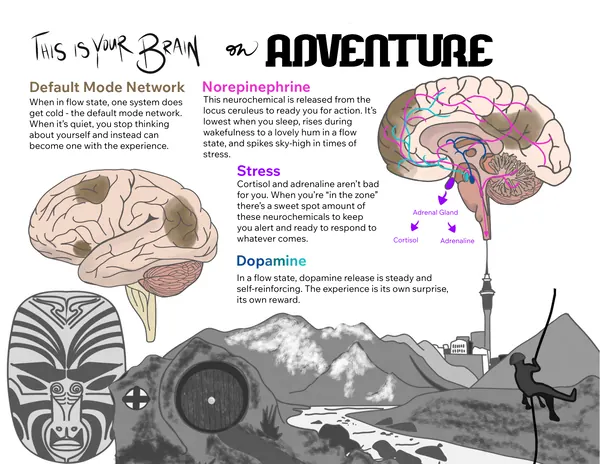
Bring your wanderlust home.
Subscribe to receive an illustrated guide to your brain on travel, plus articles, new Brain Trips, and news about the book.
Hate email? Me too. This is different. Not too often. No spam. Unsubscribe anytime.
Early readers
“This book is like Eat, Pray, Love written by Oliver Sacks, funny and fascinating. Salter shows me what’s happening inside my brain when I’m traveling. It’s one of the best book ideas I’ve seen in years.”
“For everyone post-Covid who needs light and air and connection and yes, travel, this book is a lifeline to understanding what we truly need to feel human — and how to create that transformation in ourselves at home.”
“The book Irene Salter is writing is the book I’ve been waiting for.”

About Irene
Irene Salter, PhD, is on a real-world quest to help people come alive. She holds a master’s in psychology from Stanford and a PhD in neuroscience from the University of California, San Francisco, where she studied the circuits that regulate how cues drive behavior. For two decades she taught science to students from elementary school through university, winning two teaching awards. Along the way she published in top-tier journals, founded university departments, secured millions in grant funding, and held multiple leadership roles.
Her bylines include four books, Collaborative Leadership for Thriving Teams, Composing Science, Life Science and Everyday Thinking, and AfterSchool KidzScience: Falling and Flying, along with essays in Hidden Compass and Enjoy Magazine. Today she is a sought-after speaker, facilitator, and executive coach for leaders at companies such as Disney and Google, at professional associations such as SHRM and Rotary International, and at schools and nonprofits.
When she isn’t coaching or writing, she’s adventuring: paddleboarding, traveling the world, or crawling through a D&D dungeon. She lives in rural Northern California with her husband, two children, eleven ducks, and one albino king snake.
More from Irene
Keep exploring:
-
Work/Play Co-Lab workplaycolab.com (opens in a new tab)
A monthly community for accomplished people who want work and life to feel like play again, with workshops, co-working, and a book club. Co-led with Tutti Taygerly.
- Coaching and workshops for leaders irenesalter.com (opens in a new tab)
For press and event hosts: bios and photos
Short bio
Irene Salter, PhD, is a neuroscientist, award-winning science educator, and executive coach on a real-world quest to help people come alive. She holds a master’s in psychology from Stanford and a PhD in neuroscience from UCSF, and she is writing Wanderlust Comes Home: How Travel Changes Your Brain.
Medium bio
Irene Salter, PhD, is a neuroscientist, award-winning science educator, and executive coach on a real-world quest to help people come alive. She holds a master’s in psychology from Stanford and a PhD in neuroscience from UCSF, where she studied how cues drive behavior. She has written four books, led organizations, and she is writing Wanderlust Comes Home: How Travel Changes Your Brain, a book about why travel makes us come alive and how to bring that feeling home. She lives in rural Northern California with her family and eleven ducks.
Downloads High-resolution author photos (4 shots, zipped, 18 MB)
Get in touch
Publishing, rights, and representation
Kimberley Cameron, Kimberley Cameron & Associates
Speaking, book clubs, and everything else
Irene Salter, PhD, Inquiring Minds, Inc